

Live updates: US strikes Iran amid nuclear program tensions
WASHINGTON - The United States and Israel have conducted military strikes across Iran. The action comes after weeks of warning from the U.S. about Iran's nuclear weapons program and clashes between protesters and the country’s government.
RELATED: Lawmakers react to 'Operation Epic Fury' US - Israel military strikes across Iran
RELATED: World leaders react to 'Operation Epic Fury' US - Israel military strikes across Iran
Follow ongoing updates below.
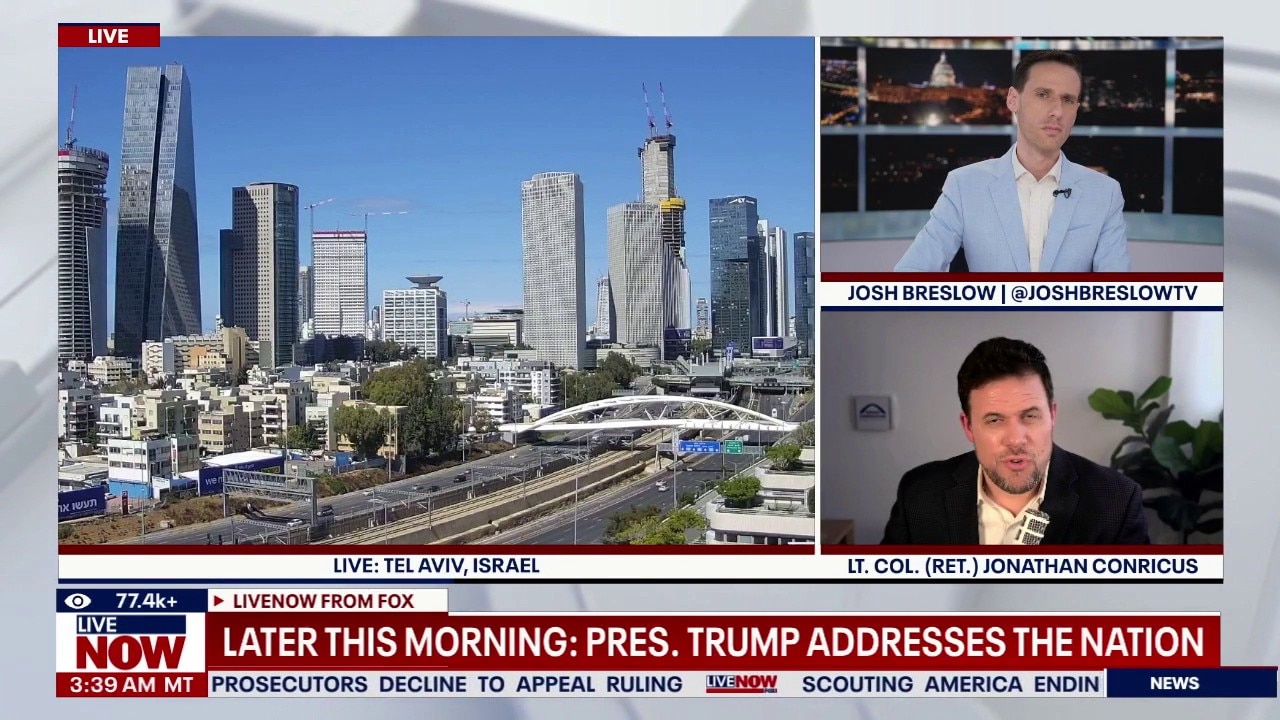
US, Israel launch joint attack against Iran
The US and Israel launched a join attack against Iran Saturday. A US official says the strikes on Iran will last days and not hours. LiveNOW's Josh Breslow breaks down the latest in the Middle East with the FDD's Jonathan Conricus.
Iran reports supreme leader's death
8:40 p.m. ET: Iranian state media reported early Sunday local time that Supreme Leader Ayatollah Ali Khamenei is dead. Iranian state television and the state-run IRNA news agency reported the 86-year-old's death, without elaborating on a cause.
White House shares photos
3:40 p.m. ET: The White House released photos of President Trump and his administration as they monitor operations in Iran.
Iran's supreme leader confirmed dead
3:12 p.m. ET: Iranian Supreme Leader Ayatollah Ali Khamenei, who ruled the Islamic Republic for more than three decades, is dead, according to President Trump and Israeli leaders. Khamenei's compound and offices were hit during the attacks in Tehran. Iran has not confirmed reports of Khamenei's death.
"Khamenei, one of the most evil people in History, is dead," Trump wrote on Truth Social. "This is not only Justice for the people of Iran, but for all Great Americans, and those people from many Countries throughout the World, that have been killed or mutilated by Khamenei and his gang of bloodthirsty THUGS."
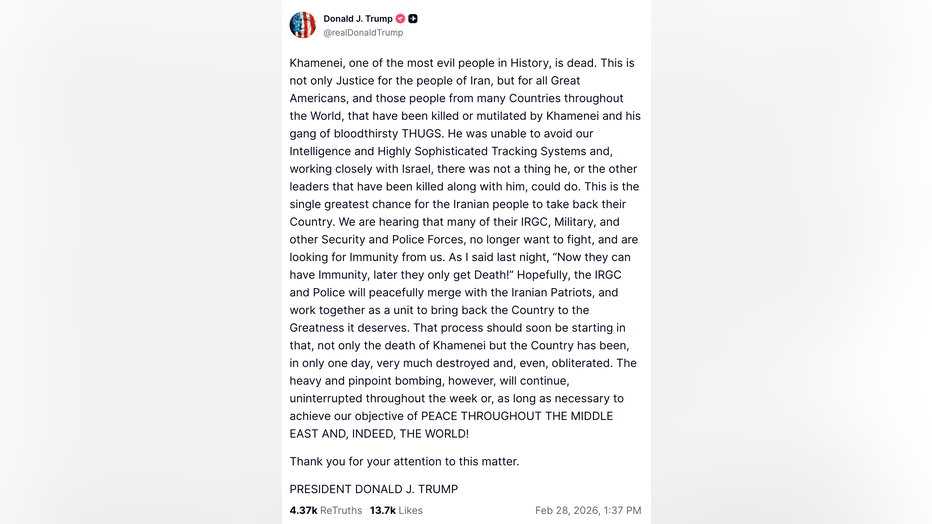
Screenshot of President Trump's post on Truth Social
Israeli officials also said 40 Iranian security and regime figures were killed. Those include the commander of the Iranian Revolutionary Guard Corps, Iran's defense minister, the secretary of the Iranian Security Council and the head of Khamenei's military bureau, The Associated Press reports.
Israel says signs growing that supreme leader is ‘no longer around’
2:20 p.m. ET: Israeli Prime Minister Benjamin Netanyahu says there is growing evidence that Iran’s Supreme Leader Ayatollah Ali Khamenei was killed in the U.S.-Israeli operation.
Speaking in a nationally televised address, Netanyahu said the strikes had targeted Khamenei’s compound. "There are growing signs that Khamenei is no longer around," he said.
Khamenei has not been seen in public since the operation began.
Will oil prices go up?
11:53 a.m. ET: Oil prices could see swings next week amid fallout from U.S.-Israeli strikes on Iran, but the potential longer-lasting impact remains unclear. Oil markets are currently closed for the weekend.
Read more on how it could impact gas prices here.
MORE: Will gas prices go up amid US strikes on Iran?
Democrats call strikes on Iran a ‘colossal mistake’
11 a.m. ET: Leading Democrats in Congress have denounced the U.S.-Israeli military action in Iran. Senate Minority Leader Chuck Schumer, a New York Democrat, is calling for the Senate to return to Washington and "reassert its constitutional duty by passing our resolution to enforce the War Powers Act."
U.S. Sen. Tim Kaine of Virginia questioned whether President Trump has learned anything "from decades of U.S. meddling in Iran and forever wars in the Middle East."
"For months, I have raised hell about the fact that the American people want lower prices, not more war — especially wars that aren’t authorized by Congress, as required by the Constitution, and don’t have a clear objective," Kaine said in a statement.
"These strikes are a colossal mistake, and I pray they do not cost our sons and daughters in uniform and at embassies throughout the region their lives," he said.
Iran says supreme leader and president are alive
10:52 a.m. ET: Iranian Foreign Minister Abbas Araghchi told NBC News that Supreme Leader Ayatollah Ali Khamenei and President Masoud Pezeshkian are alive "as far as I know."
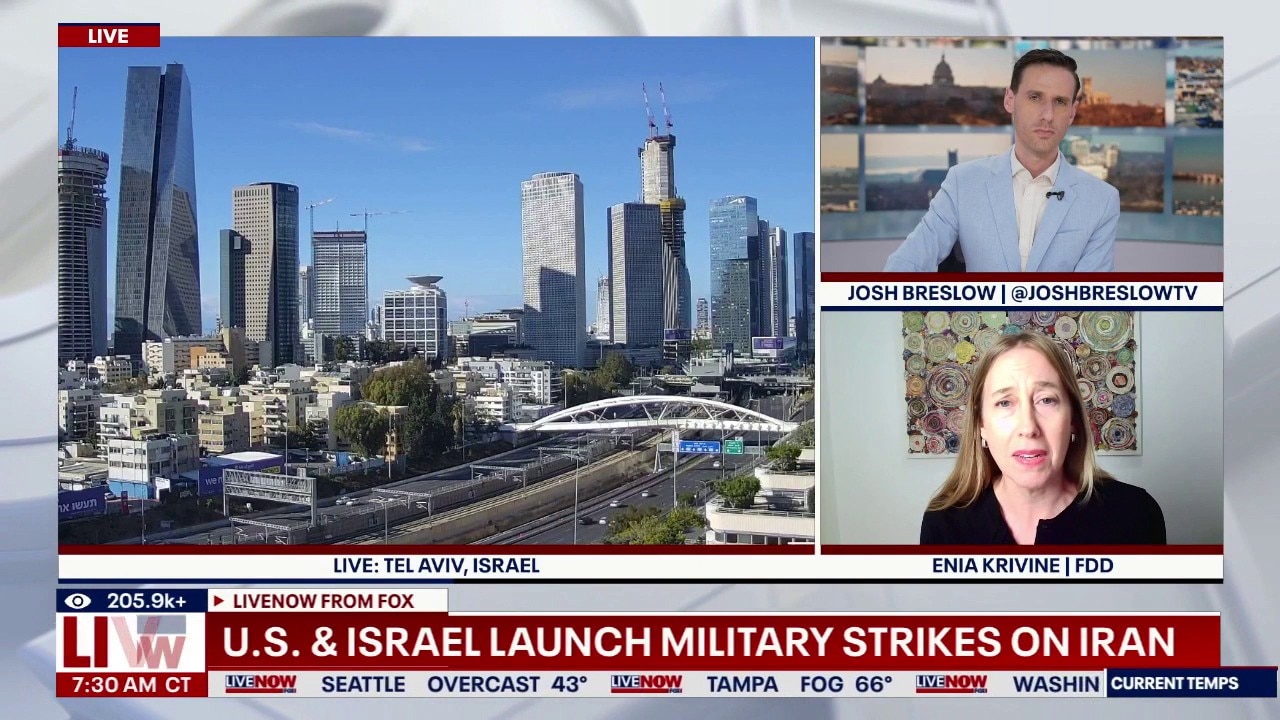
Israel releases video of strikes in Iran
The IDF released footage of the US and Israel's joint attack in Iran Saturday. LiveNOW's Josh Breslow discusses the latest developments in the Middle East with the FDD's Enia Krivine.
Iran strikes Middle East allies in retaliation
8:40 a.m. ET: Iran has launched assaults on U.S. military bases and allies in the Middle East, including United Arab Emirates, Bahrain, Qatar, Kuwait and Jordan, according to Saudi Arabia.
The Kingdom confirmed that it fully stands by those countries and warned of the "dire consequences of continued breach of sovereignty and violating international principles."
Saudi Arabia also called on the international community to take measures to confront the Iranian assaults that are "undermining" the stability and security of the region.
Russia, Pakistan condemn attacks on Iran
8:30 a.m. ET: Russia's Foreign Ministry strongly condemned the strikes on Iran Saturday, calling them "a pre-planned and unprovoked act of armed aggression against a sovereign and independent U.N. member state."
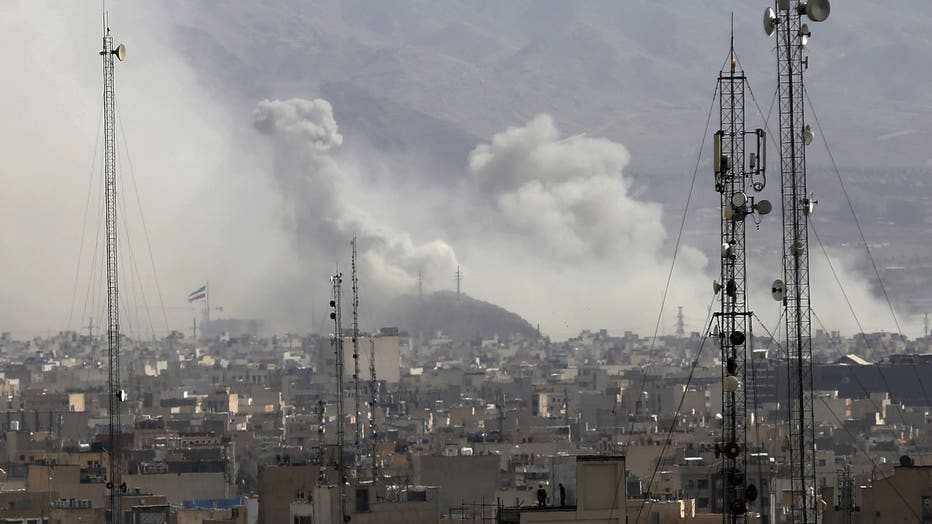
Smoke rises over the city center after an Israeli army launches 2nd wave of airstrikes on Iran on February 28, 2026. (Photo by Fatemeh Bahrami/Anadolu via Getty Images)
Pakistan’s Foreign Minister called the military operation "unwarranted."
Iran's leaders targeted in attack
8:25 a.m. ET: The targets of the Israeli strikes included members of Iran’s leadership, two sources familiar with the operation told The Associated Press. There was no word on whether the attacks had been successful.
Iran vows to defend
5 a.m. ET: Iran’s Foreign Ministry issued a defiant statement, saying that the country "will not hesitate" in its response. In a statement posted on X, the ministry said: "The time has come to defend the homeland and confront the enemy’s military assault."
Reports of blasts across region
4:40 a.m. ET: Bahrain said that a missile attack targeted the U.S. Navy’s 5th Fleet headquarters in the island kingdom, the AP reported. Witnesses heard sirens and explosions in Kuwait, home to U.S. Army Central. Explosions could be also be heard in Qatar.
The Iranian-backed Houthis in Yemen, meanwhile, vowed to resume attacks on Red Sea shipping routes and on Israel, according to two senior Houthi officials.
"Operation Epic Fury"
4:05 a.m. ET: The Defense Department announced the Saturday morning U.S. military attack against the Islamic Republic of Iran has been dubbed "Operation Epic Fury." Meanwhile, Israeli Prime Minister Benjamin Netanyahu has named his country's military operation "Operation Roaring Lion," his office said.
Military strikes on Iran
What we know:
The first wave of attacks happened early Saturday morning. Smoke could be seen in Tehran near the offices of Supreme Leader Ayatollah Ali Khamenei, according to Iranian media, with other strikes happening across the country.
Iran responded with a wave of missiles and drones fired towards Israel.
There was no immediate word of U.S. casualties.
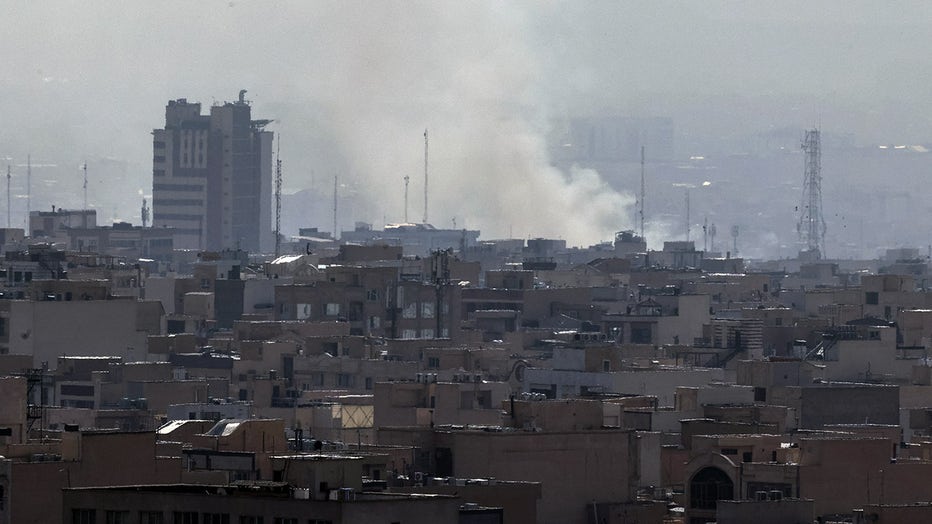
A plume of smoke rises following a reported explosion in Tehran on February 28, 2026. (Photo by ATTA KENARE / AFP via Getty Images)
What they're saying:
President Donald Trump said in a video posted on his Truth social media account that the U.S. had begun "major combat operations in Iran." He claimed Iran has continued to develop its nuclear weapons program and plans to develop missiles to reach U.S. and appealed to the Iranian people to "take over your government — it will be yours to take."
"Our joint operation will create the conditions for the brave Iranian people to take their fate into their own hands," Israeli Prime Minister Benjamin Netanyahu said.
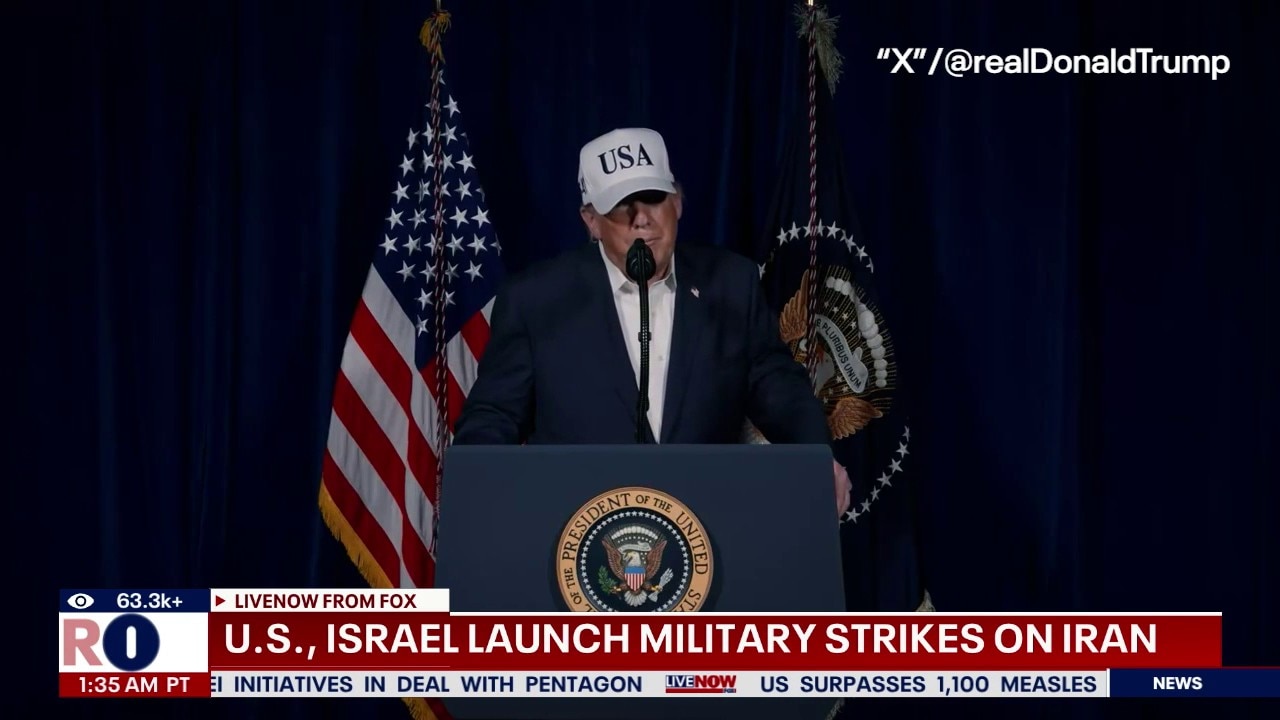
President Trump's statement on Iran strikes
President Trump posted this 8-minute video to social media outlining his reasons for military strikes against Iran.
Iran's nuclear program
The backstory:
President Trump had threatened action if Tehran did not negotiate a deal to constrain its nuclear program. Meanwhile, he ordered the largest military buildup in the Middle East in decades.
Both sides signaled they were prepared for war if the talks on Tehran’s nuclear program failed.
Iran insists its nuclear program is peaceful, the U.S. and others suspect it is aimed at eventually developing weapons. Iran says it hasn’t been enriching uranium since U.S. and Israeli strikes on Iranian nuclear sites in June.
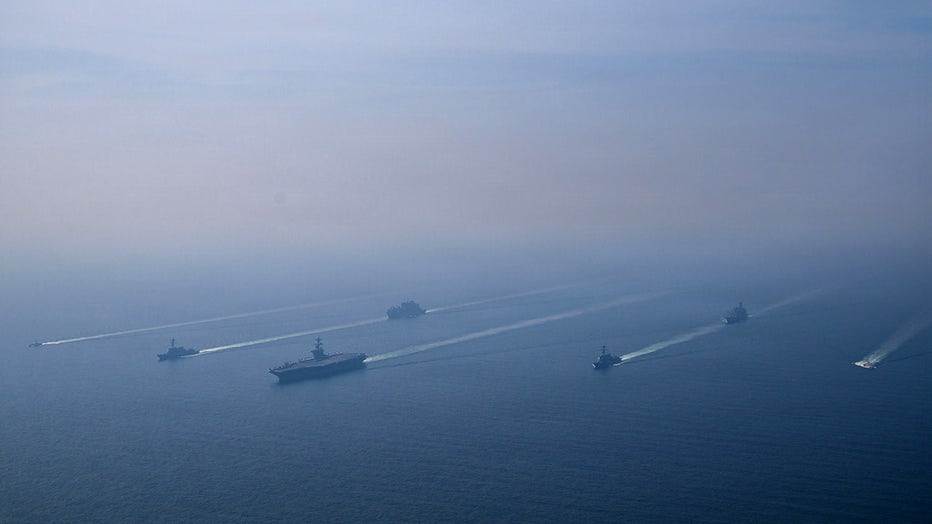
File: The USS Abraham Lincoln carrier strike group sails in formation in the Arabian Sea, Feb. 6, 2026. (U.S. Navy photo by Mass Communication Specialist 1st Class Jesse Monford)
Iran protests
Dig deeper:
Nationwide protests in Iran sparked by the Islamic Republic’s ailing economy put new pressure on its theocracy, which responded with a deadly crackdown and shutting down the internet.
Thousands were killed and tens of thousands are believed to have been arrested.
Mourners held ceremonies honoring slain protesters 40 days after their killing by security forces. Some gatherings have seen anti-government chants despite threats from authorities.
Tehran is still reeling from a 12-day war launched by Israel in June that saw the U.S. bomb nuclear sites in Iran.
Economic pressure, which has intensified since September when the United Nations reimposed sanctions on the country over its atomic program, has sent Iran’s rial currency into a free fall, now trading at over 1.4 million to $1.
Meanwhile, Iran’s self-described "Axis of Resistance" — a coalition of countries and militant groups backed by Tehran — has been decimated since the start of the Israel-Hamas war in 2023.
Poll shows low support
A University of Maryland Critical Issues Poll released this week found that Americans would most commonly oppose the U.S. initiating an attack on Iran.
By the numbers:
The poll, which was carried out Feb. 5-9, found that 21% of Americans favor the United States initiating an attack on Iran, 49% oppose, and 30% said they didn’t know.
Tension between US and Iran
Timeline:
Iran and the U.S. have seesawed between enmity and grudging diplomacy for decades.
Iran and the U.S. were strong allies under Shah Mohammad Reza Pahlavi during the 1950s.
American military weapons, as well as assistance from the CIA, solidified the shah’s rule for years until 1979, when Pahlavi fled Iran amid massive demonstrations against his rule.
The Islamic Revolution, led by Ayatollah Ruhollah Khomeini, took over and created Iran’s theocratic government.
Later that year, university students overran the U.S. Embassy in Tehran, seeking the shah’s extradition and sparking the 444-day hostage crisis that saw diplomatic relations between Iran and the U.S. severed.
In the 1980s, the U.S. backed Iraqi leader Saddam Hussein during the Iran-Iraq war, creating further animosity.
Relations peaked with the 2015 nuclear deal, which saw Iran greatly limit its program in exchange for the lifting of sanctions.
But Trump unilaterally withdrew America from the accord in 2018, sparking tensions in the Mideast that intensified after Hamas’ Oct. 7, 2023, attack on Israel.
The Source: Information for this article was taken from The Associated Press, FOX News, official social media accounts from those involved, and previous FOX Local reporting. Megan Ziegler contributed.